
Author: niuchen

  • Helping Family Members Buy Homes: A Living Inheritance Through Reverse Mortgage

    Helping Family Members Buy Homes: A Living Inheritance Through Reverse Mortgage

    For many families, supporting the next generation in buying real estate has become both a dream and a challenge. Housing prices keep climbing, down payments feel heavier than ever, and traditional financing doesn’t always offer the flexibility people need. This is where a little-known tool can make a big difference: using a reverse mortgage as a form of living inheritance.

    A living inheritance simply means parents or grandparents provide financial support while they are still alive, instead of waiting until an estate is transferred. For families, this approach can be life-changing. Imagine helping your child secure the down payment for a first home, or giving them the freedom to invest in a property they couldn’t otherwise reach—without needing to sell your own investments or create an unexpected tax bill.

    Here’s how it works. Many homeowners are asset-rich but cash-poor. They may not have liquid assets, or may not qualify for a traditional mortgage or a home equity line of credit (HELOC). A reverse mortgage opens another door: it allows homeowners to release equity directly from their primary residence. The funds are tax-free and, most importantly, payment-optional. That means no mandatory monthly principal and interest obligations, keeping financial stress low.

    Why does this matter? Because gifting from taxable investments often triggers capital gains tax and reduces long-term savings. By borrowing against the home, families can often lower their overall cost while still passing on meaningful support. It’s not about spending the house; it’s about using existing equity as a financial tool, so parents can help their children today while still enjoying the home they love.

    This strategy is increasingly seen as a way to balance personal retirement needs with the desire to give. Instead of selling off investments or downsizing too soon, a reverse mortgage can act as a flexible, cost-efficient cushion that aligns family goals with financial reality.

    For those curious about practical examples, the concept is explored further in Reverse mortgages: 55+? A cushion against the rising cost of living,

    When it comes to real estate decisions—whether buying, selling, or planning financing options—it helps to know all the tools available. MorningLee.ca is where knowledge and opportunity meet.


    Helping Family Members Buy Homes: A Living Inheritance Through Reverse Mortgage
  • Turning Home Equity Into Opportunity: Why More Canadians Are Exploring Reverse Mortgages

    Turning Home Equity Into Opportunity: Why More Canadians Are Exploring Reverse Mortgages

    For many homeowners, the family house is more than just a roof overhead—it is often their largest single asset. Over time, as mortgages are paid down and property values rise, the equity in a home can quietly grow into a powerful financial tool. Increasingly, Canadians are discovering ways to unlock that equity to achieve goals that once seemed out of reach: buying a vacation property, helping adult children enter the market, or strengthening retirement income.

    Reverse Mortgage Basics

    A reverse mortgage is designed specifically for homeowners aged 55 and older. Unlike a traditional mortgage, it does not require mandatory monthly principal or interest payments. Instead, repayment is deferred until the borrower sells the home, moves, or passes away. The loan amount is determined by several factors including the homeowner’s age, property value, and location. Because there are no mandatory payments, borrowers often see their Total Debt Service ratio (TDS) reduced—an important factor when lenders evaluate overall borrowing capacity.

    For those who want to dig deeper into how reverse mortgages can cushion against rising living costs, a detailed overview is available here: Reverse mortgages: 55+? A cushion against the rising cost of living.

    Applications Beyond Retirement

    Traditionally, reverse mortgages have been seen mainly as a retirement planning tool. But in today’s real estate market, some homeowners are leveraging them for broader purposes. For example, funds released from a principal residence can be used to:

    • Purchase a second home or vacation property, either outright or in combination with a traditional mortgage.
    • Invest in a rental property to generate supplemental income.
    • Support lifestyle choices such as downsizing at the right time without rushing to sell in a slower market.

    Because reverse mortgages do not impose the same monthly repayment obligations, homeowners may find themselves eligible for additional borrowing opportunities that would otherwise be out of reach.

    Balancing Investment and Risk

    Using home equity as leverage can open doors, but it comes with important considerations. Tax implications—such as capital gains on second properties or reporting rental income—need careful planning. Market risks, including price fluctuations and potential vacancies, also play a role. On the other hand, for those with a long-term horizon, real estate remains a tangible asset that can diversify overall retirement strategy.

    A Smarter Approach to Real Estate Planning

    What makes these strategies appealing is flexibility. Some homeowners choose to hold onto their existing property while purchasing a new one, postponing the sale until market conditions align with their goals. Others appreciate the low prepayment penalties available in certain reverse mortgage products, giving them freedom to adjust plans as life changes.

    Real estate decisions—whether buying, selling, or financing—are rarely one-size-fits-all. They require careful evaluation of financial position, lifestyle goals, and long-term outlook. For many Canadians, reverse mortgages have quietly become a tool worth considering in that equation.

    To explore more insights and options tailored to your situation, visit MorningLee.ca.

    Turning Home Equity Into Opportunity: Why More Canadians Are Exploring Reverse Mortgages
  • Tariff Turmoil Takes Its Toll

    Tariff Turmoil Takes Its Toll

    Tariff Turmoil Takes Its Toll

    Statistics Canada released Q2 GDP data, showing a weaker-than-expected -1.6% seasonally adjusted annual rate, in line with the Bank of Canada’s forecast, but a larger dip than the consensus forecast. The contraction primarily reflected a sharp decline in exports, down 26.8%, which reduced headline GDP growth by 8.1 percentage points. Business fixed investment was also weak, contracting 10.1%, mainly due to a 32.6% decline in business equipment spending. 

    Exports declined 7.5% in the second quarter after increasing 1.4% in the first quarter. As a consequence of United States-imposed tariffs, international exports of passenger cars and light trucks plummeted 24.7% in the second quarter. Exports of industrial machinery, equipment and parts (-18.5%) and travel services (-11.1%) also declined.

    Amid the counter-tariff response by the Canadian government to imports from the United States (which has now been rescinded), international imports declined 1.3% in the second quarter, following a 0.9% increase in the previous quarter. Lower imports of passenger vehicles (-9.2%) and travel services (-8.5%; primarily Canadians travelling abroad) were offset by higher imports of intermediate metal products (+35.8%), particularly unwrought gold, silver, and platinum group metals.

    Export (-3.3%) and import (-2.3%) prices fell in the second quarter, as businesses likely absorbed some of the additional costs of tariffs by lowering prices. Given the larger decline in export prices, the terms of trade—the ratio of the price of exports to the price of imports—fell 1.1%.

    But the report was not all bad news. Consumer resilience was also evident. Household consumption spending accelerated in Q2. Personal spending rose 4.5% compared to 0.5% in Q1. Government spending also notably contributed to growth. 

    An improvement in housing activity also added to economic activity. Residential investment grew at a firm rate of 6.3%, compared to a decline of 12.2% in the first quarter of the year. 

    Final domestic demand rose 3.5% annualized, reflecting resilience and perhaps Canadians’ boycott of US travel or US products. However, income growth was up just 0.7% year-over-year (at an annual rate), which pulled the savings rate down one percentage point to 5.0%, potentially hampering consumers’ ability to continue their spending.

    Inventories of finished goods and inputs to the production process increased by 26.9%, reflecting the Q1 stockpiling of goods that would be subject to future tariffs. 

    While Q2 was soft, June GDP was arguably more disappointing at -0.1% m/m, two ticks below consensus. Manufacturing was the surprise, falling 1.5%. Services were mixed, with gains in wholesale and retail offsetting some broader weakness. The July flash estimate was +0.1% (on the firmer side, given some of the soft data thus far), but the June figure makes it clear that the final print can be quite different.

    The Bank had Q2 GDP at -1.5% in their July Monetary Policy Report, so the miss was minor. And, the strength in domestic demand highlights the economy’s resilience. One negative is that Q3 is tracking softer than their +1% estimate (closer to +0.5%), but it’s still very early, and things can change materially.

    Bottom Line

    The odds are no better than even for the Bank of Canada to cut rates when they meet again on September 17. There are two key data releases before then — the August Labour Force Survey, released August 5, a week from today, and the August CPI release on September 16. We would have to see considerable weakness in both reports to trigger a Canadian rate cut next month.

    A Fed rate cut is far more likely, as telegraphed by Chair Jay Powell at the annual Jackson Hole confab. The battle between the White House and the Fed has intensified with President Trump’s firing of Governor Lisa Cook, the first Black woman on the Board and a Biden appointee. If Trump were to succeed, it would enable him to appoint a majority of the Federal Reserve Board, potentially allowing him to dictate monetary policy. 

    Trump wants significantly lower interest rates in the US, but even if he succeeds, only shorter-term rates would decline. The loss of Fed independence could lead to higher, longer-term interest rates, which could likely result in higher fixed mortgage rates in Canada. Moreover, inflation pressures could intensify, leading to continued upward pressure on bond yields and diminishing the potential appeal of floating-rate mortgage loans.

    Dr. Sherry Cooper

  • Reverse mortgages: 55+? A cushion against the rising cost of living

    Reverse mortgages: 55+? A cushion against the rising cost of living

    Did you know?

    A reverse mortgage can be a flexible tool for a senior to offset the rising cost of living, to borrow more than a bank may be willing to lend for a traditional mortgage, and to provide emergency funds for long-term care.

    Scenario

    Judith is a 75-year-old and living on Steeles Avenue in North York, Toronto. She’s lived in her home for over 40 years, and she and her late husband raised their family there. Given the location, she figures her older home is worth about $2 million. There’s also been speculation that there may someday be approval for condo development, which could cause the land value to skyrocket.
    Judith receives the maximum CPP pension of about $1,300 per month (a combination of her own retirement pension and a survivor pension for her late husband) and gets nearly the maximum OAS pension—another $700 or so each month. That equates to about $2,000 of monthly pension income from the federal government. She also has a small defined benefit pension from the UK government that fluctuates year to year based on the exchange rate.

    Beyond that, she’s been drawing down a savings account from a modest inheritance from her parents and a small life insurance policy paid out when her husband passed away a few years ago.

    Judith’s financial options to help cushion the impact of inflation:

    1. Credit card
    2. HELOC
    3. Sell her home and move into an apartment or retirement home, and invest into GICs to cover her monthly costs.

    Solution

    Judith decides a reverse mortgage might be a good fit for her—but not yet. She can use the $100,000 secured line of credit from the bank for now, but if she wants to stay in her home, eventually a reverse mortgage might be the best borrowing option. She’s willing to pay interest, and besides, she’s hopeful her home value will rise, tax-free, despite the interest she may pay.

    More importantly, depleting the value of her estate seems unfounded. If she sells her home and rents, she’ll be spending a portion of her children’s inheritance either way. Her kids are supportive of her doing what she wants, which is to maintain the status quo.

    Judith thinks a lot about what she would want to happen if her health deteriorated. She’d rather not count on help from her kids, preferring to pay for her costs herself.

    A reverse mortgage could provide her with roughly $900,000 that could be accessed all at once, advanced as scheduled monthly payments like a pension, or borrowed on an as-needed basis. She may not need to borrow much to supplement her spending in her 80s, but having access to a large part of her home equity appeals to her.

    Plus, if a developer does buy along her street to make way for condos, her home value may appreciate significantly.

    Ready to Get Started?

    If you’d like to learn more about how a reverse mortgage may similarly suit your needs, I’d be happy to help answer any quesitons you may have – with no obligations. Contact Us now.

    Reverse mortgages: A cushion against the rising cost of living
  • CPI Report Shows Headline Inflation Cooling, But Core Inflation Remains Troubling

    CPI Report Shows Headline Inflation Cooling, But Core Inflation Remains Troubling

    Today's CPI Report Shows Headline Inflation Cooling, But Core Inflation Remains Troubling

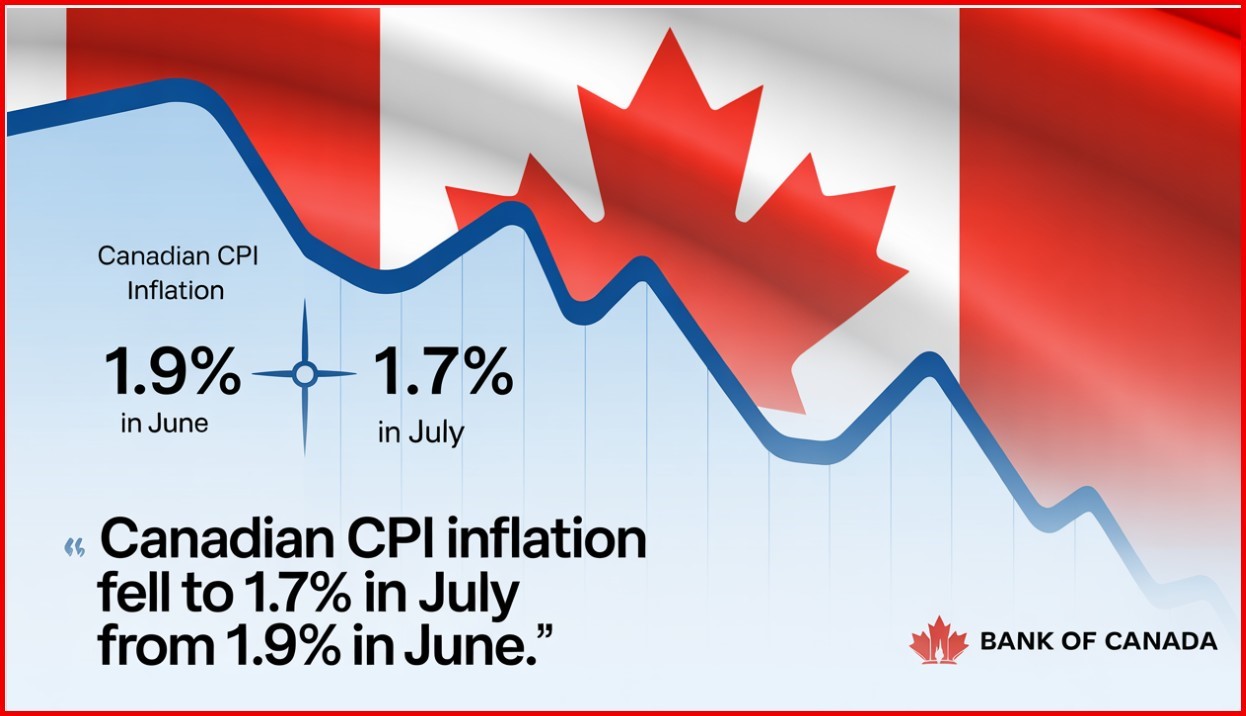
    Canadian consumer prices decelerated to 1.7% y/y in July, a bit better than expected and down two ticks from June’s reading. 
    Gasoline prices led the slowdown in the all-items CPI, falling 16.1% year over year in July, following a 13.4% decline in June. Excluding gasoline, the CPI rose 2.5% in July, matching the increases in May and June.

    Gasoline prices fell 0.7% m/m in July. Lower crude oil prices, following the ceasefire between Iran and Israel, contributed to the decline. In addition, increased supply from the Organization of the Petroleum Exporting Countries and its partners (OPEC+) put downward pressure on the index.

    Moderating the deceleration in July were higher prices for groceries and a smaller year-over-year decline in natural gas prices compared with June.

    The CPI rose 0.3% month over month in July. On a seasonally adjusted monthly basis, the CPI was up 0.1%.

    In July, prices for shelter rose 3.0% year over year, following a 2.9% increase in June, with upward pressure mostly coming from the natural gas and rent indexes. This was the first acceleration in shelter prices since February 2024.

    Prices for natural gas fell to a lesser extent in July (-7.3%) compared with June (-14.1%). The smaller decline was mainly due to higher prices in Ontario, which increased 1.8% in July after a 14.0% decline in June.

    Rent prices rose at a faster pace year over year, up 5.1% in July following a 4.7% increase in June. Rent price growth accelerated the most in Prince Edward Island (+5.6%), Newfoundland and Labrador (+7.8%) and British Columbia (+4.8%).

    Moderating the acceleration in shelter was continued slower price growth in mortgage interest cost, which rose 4.8% year over year in July, after a 5.6% gain in June. The mortgage interest cost index has decelerated on a year-over-year basis since September 2023.

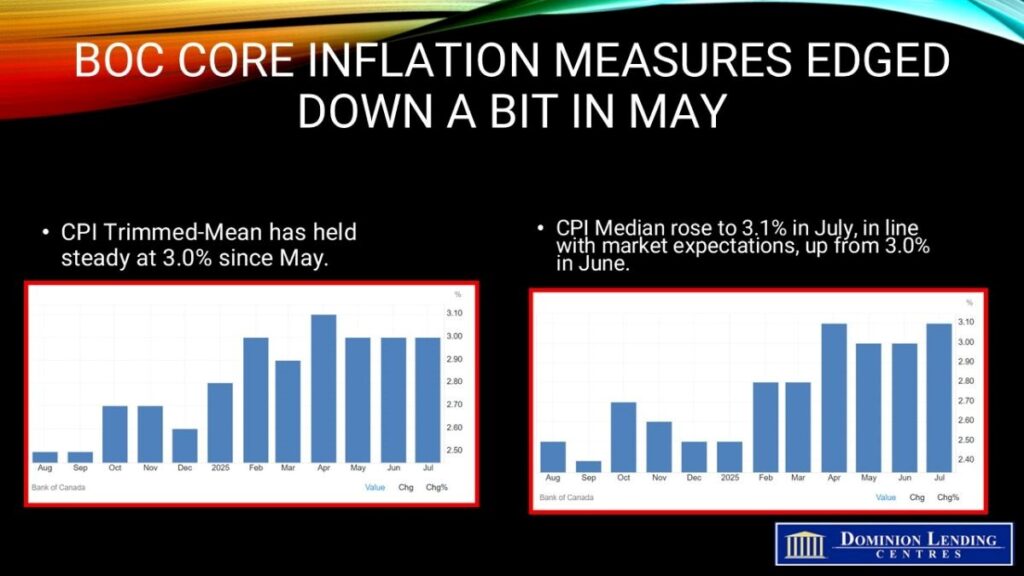
    The Bank of Canada’s two preferred core inflation measures accelerated slightly, averaging 3.05%, up from 3% in May, and above economists’ median projection. Traders see the continued strength in core inflation as indicative of relatively robust household spending. 

    There’s also another critical sign of firmer price pressures: The share of components in the consumer price index basket that are rising by 3% or more — another key metric the central bank’s policymakers are watching closely — expanded to 40%, from 39.1% in June. 

    CPI excluding taxes eased to 2.3%, while CPI excluding shelter slowed to 1.2%. CPI excluding food and energy dropped to 2.5%, and CPI excluding eight volatile components and indirect taxes fell to 2.6%.

    The breadth of inflation is also rising. The share of components with the consumer price index basket that are increasing 3% and higher — another key metric that the bank’s policymakers are following closely  — fell to 37.3%, from 39.1% in June.

    Bottom Line

    With today’s CPI painting a mixed picture, the following inflation report becomes more critical for the Governing Council. The August CPI will be released the day before the September 17 meeting of the central bank. There is also another employment report released on September 5. 

    Traders see roughly 84% odds of a Federal Reserve rate cut when they meet again on Sept 17–the same day as Canada. Currently, the odds of a rate cut by the BoC stand at 34%. Unless the August inflation report shows an improvement in core inflation, the Bank will remain on the sidelines. 

    Dr. Sherry Cooper

  • Owning $10 million in real estate but denied a loan—how to turn rejection into a powerful tool

    Owning $10 million in real estate but denied a loan—how to turn rejection into a powerful tool

    Imagine Investor A, holding seven properties with a total value $10+ million. They spot a rare opportunity: sellers urgently offloading prime real estate at below-market price. But when they approach traditional banks for a loan, they hit a wall.

    The Dilemma
    Despite looking like a financial winner, reality bites:

    • Self-employment income nearly zero due to market changes
    • Loans only $2 million, net assets $8 million
    • Primary residence worth $2.2 million, mortgage $200k
    • Rental income covers mortgage with positive cash flow, but after daily expenses and maintenance, disposable cash is limited
    • Excellent credit score and history

    Yet, major banks refused their applications. Why? Income too low, debt too high, and unable to pass standard stress tests.

    Breaking the Gridlock
    Investor A came to us, and we break it through by thinking differently. While banks focus on regular income, we realized Investor A’s wealth was “locked in walls.” Six solutions emerged by us:

    1. Reverse Mortgage (Primary Residence, Age 55+)

    • Benefits:
      • No income verification.
      • Flexible credit requirements.
      • No down payment required.
      • Access up to ~50% of your home equity.
      • Funds received as monthly payments, lump sum, or instalments.
      • Minimal fees, almost none.
      • Fast approval.
    • Drawbacks:
      • Only available for primary residences (not investment properties).
    • Maximum Cash Available: ~$1 million

    2. “Enhanced” Reverse Mortgage (Primary Residence, No Age Requirement)

    • Benefits:
      • No age requirement.
      • No income verification.
      • Flexible credit requirements.
      • No down payment required.
      • Access up to 60% of your home equity.
      • Funds received as monthly payments, lump sum, or instalments.
      • Fast approval.
      • Cancel anytime without penalty.
    • Drawbacks:
      • Only available for primary residences (not investment properties).
      • Higher fees.
    • Maximum Cash Available: ~$1.2 million

    3. First Mortgage Home Equity Line of Credit

    • Benefits:
      • Access up to 75% of home equity.
      • No income verification.
      • No age requirement.
      • Flexible credit requirements.
      • Pay interest only on amounts drawn; no payment if unused. Access funds freely and flexibly.
    • Drawbacks:
      • Higher fees.
      • Requires terminating existing first mortgage.
    • Maximum Cash Available: ~$6 million

    4. First Mortgage Home Equity Mortgage

    • Benefits:
      • Access up to 75% of home equity.
      • No income verification.
      • No age requirement.
      • Flexible credit requirements.
      • Lower fees than a First Mortgage HELOC.
    • Drawbacks:
      • Requires terminating existing first mortgage.
      • Monthly payments required.
    • Maximum Cash Available: ~$6 million

    5. Second Mortgage Home Equity Line of Credit

    • Benefits:
      • No income verification.
      • No age requirement.
      • Flexible credit requirements.
      • Access up to 75% of home equity.
      • Pay interest only on amounts drawn; no payment if unused. Access funds freely and flexibly.
      • Does not require terminating existing first mortgage.
    • Drawbacks:
      • Higher fees.
    • Maximum Cash Available: ~$6 million

    6. Second Mortgage Home Equity Loan

    • Benefits:
      • No income verification.
      • No age requirement.
      • Flexible credit requirements.
      • Access up to 75% of home equity.
      • Does not require terminating your existing first mortgage.
      • Lower fees than a Second Mortgage HELOC.
    • Drawbacks:
      • Monthly payments required.
    • Maximum Cash Available: ~$6 million

    Investor A opted for a mix of all six, leveraging each solution’s strengths while minimizing drawbacks according to the banks policies and his own situation like title, balance, interest rate, etc .

    The Result
    Investor A secured a $5 million credit line with two remarkable features:

    1. Off loaded the cash pressure— and interest applies only when money is used
    2. Ready to close good deals any time and immediate access to funds when needed – won’t miss any good opportunities to build up more wealth.

    From nearly depleted cash reserves, Investor A now had millions ready to seize undervalued properties, paying cash instantly. No income verification, no stress tests, no mandatory monthly payments—like turning their property into a giant credit card that only charges when used.

    Practical Impact
    Opportunities came faster than expected. Sellers in a slow market offered below-market prices with room to negotiate. While others waited for bank approvals, Investor A could pay in cash, creating a competitive edge. The secret wasn’t having money—it was unlocking dormant assets to capitalize on timing and market gaps.

    Key Takeaway
    Banks have rules, but asset value is undeniable. When income-based paths fail, check the “walls” you’ve built—every brick could be emergency cash or a lever to unlock opportunities. Investor A’s transformation? From chasing bank loans to letting assets speak for themselves.

    Assess your own available funds immediately: Evaluate available credit limit.

    For buyers, sellers, or anyone navigating property financing, understanding alternative funding strategies can make the difference between watching opportunities slip away or seizing them confidently.

    Explore more insights and strategic approaches at MorningLee.ca:Case Study: How Debt Restructuring Can Save You Thousands

    For a safer, smarter property purchase, conduct real estate due diligence for comprehensive property inspections and risk assessments.

    Owning $10 million in real estate but denied a loan—how to turn rejection into a powerful tool

  • Canadian Homebuyers Return in July, Posting the Fourth Consecutive Sales Gain

    Canadian Homebuyers Return in July, Posting the Fourth Consecutive Sales Gain

    Canadian Homebuyers Return in July, Posting the Fourth Consecutive Sales Gain

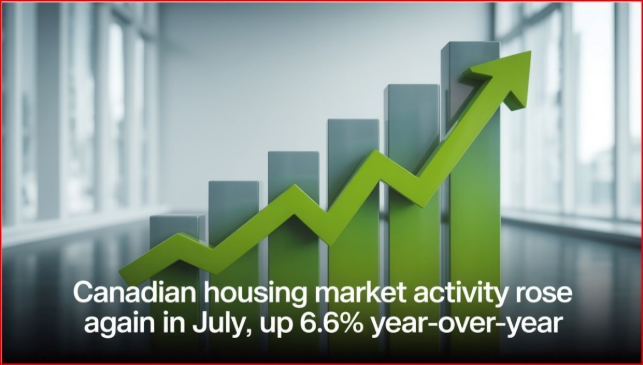
    Today’s release of the July housing data by the Canadian Real Estate Association (CREA) showed good news on the housing front. Following a disappointing spring selling season, National home sales were up 3.8% in July from the month before, with Toronto seeing transactions rebound 35.5% since March. However, the total number of Toronto sales remains low by historical standards.

    On a year-over-year basis, total transactions have risen 11.2% since March. 

    There is growing confidence that the Canadian economy will resiliently weather the tariff trauma. The Canadian dollar is up, and longer-term interest rates have edged downward in the past ten days. Traders are now anticipating a rate cut by the Federal Reserve in September.

    Tuesday’s release of the Canadian CPI will provide another data point for the Bank of Canada. Economic growth has held up, in large part because much of the pain from tariffs has been confined to industries singled out for levies, including autos, steel and aluminum.

    Shaun Cathcart, the real estate board’s senior economist, said, “With sales posting a fourth consecutive increase in July, and almost 4% at that, the long-anticipated post-inflation crisis pickup in housing seems to have finally arrived. The shock and maybe the dread that we felt back in February, March and April seem to have faded,” as people become less concerned about their future employment.

    New Listings

    New supply was little changed (+0.1%) month-over-month in July. Combined with the notable increase in sales, the national sales-to-new listings ratio rose to 52%, up from 50.1% in June and 47.4% in May. The long-term average for the national sales-to-new listings ratio is 54.9%, with readings roughly between 45% and 65% generally consistent with balanced housing market conditions.

    There were 202,500 properties listed for sale on all Canadian MLS® Systems at the end of July 2025, up 10.1% from a year earlier and in line with the long-term average for that time of the year.

    “Activity continues to pick up through the transition from the spring to the summer market, which is the opposite of a normal year, but this has not been a normal year,” said Valérie Paquin, CREA Chair. “Typically, we see a burst of new listings right at the beginning of September to kick off the fall market, but it seems like buyers are increasingly returning to the market.

    There were 4.4 months of inventory on a national basis at the end of July 2025, dropping further below the long-term average of five months of inventory as sales continue to pick up. Based on one standard deviation above and below that long-term average, a seller’s market would be below 3.6 months, and a buyer’s market would be above 6.4 months.

    Home Prices

    The National Composite MLS® Home Price Index (HPI) was unchanged between June and July 2025. Following declines in the first quarter of the year, the national benchmark price has remained mostly stable since May.

    The non-seasonally adjusted National Composite MLS® HPI was down 3.4% compared to July 2024. This was a smaller decrease than the one recorded in June.

    Based on the extent to which prices fell off in the second half of 2024, look for year-over-year declines to continue to shrink in the months ahead.

    Bottom Line

    Homebuyers are responding to improving fundamentals in the Canadian housing market. Supply has risen as new listings surged until May of this year. Additionally, the benchmark price was $688,700, 3.4% lower than a year earlier. That decrease was smaller than in June, and the board expects year-over-year declines to continue shrinking, it said in a statement.

    While many expect the Fed to ease in September, I’m not sure it will happen. The producer price index came in hotter than expected this week. Fed action will depend mainly on the personal consumption expenditures index (PCE), the Fed’s favourite measure of inflation, which will be out on August 29. 

    US stagflation worries have emerged with the release of the July employment report, which showed considerable weakness, enough to get the head of the Bureau of Labour Statistics fired. The likelihood of a BoC cut will increase if the Fed begins a series of easing moves as the administration is demanding.

    Dr. Sherry Cooper

  • Case Study: How Debt Restructuring Can Save You Thousands

    Case Study: How Debt Restructuring Can Save You Thousands

    When you’re juggling multiple loans and high-interest debts, Debt Restructuring can be the financial strategy that brings relief—and significant savings. For many homeowners and buyers in the Vancouver real estate market, understanding how to restructure debt is not just about reducing monthly payments; it’s about creating long-term financial stability.


    Debt Restructuring Explained

    Debt Restructuring is the process of consolidating or reorganizing your existing debts—such as a first mortgage, second mortgage, or credit card balances—into a single, more manageable loan. This often means replacing high-interest debts with one loan at a lower rate, which can save you a substantial amount of money over time.

    For example, instead of paying off several loans at different rates and due dates, you merge them into one loan with a fixed repayment plan. This simplifies budgeting, reduces stress, and helps avoid missed payments.


    Case Study 1: First and Second Mortgage Consolidation

    Imagine you have a first mortgage at 4.9% and a second mortgage at 9.5%. Paying these separately may feel manageable month-to-month, but over the long term, the extra interest on the second mortgage adds up quickly.

    Through Debt Restructuring, you could merge both mortgages into a single loan at, say, 5.5%. While the new rate may be slightly higher than your first mortgage’s rate, it’s much lower than the second mortgage’s rate. The result: you pay less interest overall and simplify your repayment schedule.


    Case Study 2: Adding Credit Card Debt to the Mix

    Now let’s take it a step further. Suppose you have the same first and second mortgages, plus credit card debt at 19.9% interest. By consolidating all three into one restructured mortgage, you replace high-interest revolving debt with a lower fixed rate. This not only reduces your monthly payment but also helps you pay down your debt faster since more of your payment goes toward the principal rather than interest.


    Why Debt Restructuring Matters for Real Estate Buyers and Sellers

    If you’re a home buyer, debt restructuring can improve your credit profile, making it easier to qualify for better mortgage terms. For home sellers, clearing high-interest debt before listing your property may improve your financial flexibility, allowing you to handle closing costs or invest in home staging.

    In a high-cost housing market like Vancouver, these savings can make the difference between feeling financially stretched and maintaining stability. For insights on broader market trends that affect borrowing costs, check out this recent report:
    Today’s Report Shows Inflation Remains a Concern, Forestalling BoC Action.


    A Smart Move: Pair Debt Restructuring with Property Risk Checks

    When you’re making big real estate decisions, understanding your financial position is only half the equation. It’s also important to understand the property you’re buying. Services like EstateDetect.com specialize in investigating potential risks and uncovering opportunities before you commit to a purchase, giving you peace of mind.


    Final Thought:
    Debt Restructuring isn’t just a way to lower payments—it’s a long-term strategy for financial health. By learning how to consolidate loans effectively, you can save thousands in interest and simplify your path toward debt freedom. For more real estate and finance insights, visit MorningLee.ca.

    Case Study: How Debt Restructuring Can Save You Thousands
  • Sell Residential Property in Vancouver? Market Signs Show It’s Turning a Corner

    Sell Residential Property in Vancouver? Market Signs Show It’s Turning a Corner

    If you’re looking to sell residential property in Vancouver, the timing may finally be shifting in your favour. After months of hesitation, the national housing market—particularly in key metros like Vancouver and Toronto—is showing signs of a turnaround. According to a July 2025 report from MorningLee.ca, both sales and price activity have begun to stabilize, hinting that we may be entering a more balanced and predictable phase of the market.

    Let’s break down what this means for sellers in Vancouver, and why some property types might have a better window to sell than others.


    1. Sell Residential Property inVancouverWhy This Could Be a Turning Point for Sellers

    The latest data shows that home sales rose while prices held steady in June 2025. Nationally, sales were up around 3% month-over-month, and the national sales-to-new-listings ratio rose to 50.1%—a shift toward balanced market conditions.

    In Vancouver, this means buyer activity is creeping back despite ongoing uncertainty like tariff threats and fluctuating interest rate expectations. As MorningLee.ca notes, market momentum may simply have been delayed by a rocky economic spring—and is now resurfacing into the summer and fall.


    2. Sell Residential Property inVancouver?What It Means by Property Type: Not All Homes Are Equal

    If you’re planning to sell residential property in Vancouver, it’s essential to understand how different home types are performing:

    • Single-family homes: Typically more sensitive to interest rate shifts and economic headlines, these properties may attract buyers looking for long-term stability—especially as price declines have moderated.
    • Townhouses and duplexes: Often appealing to move-up buyers or downsizers, these mid-density homes could benefit from stabilizing price expectations and a tighter sales-to-listings ratio.
    • Condos and apartments: While not explicitly broken down in the June report, condos tend to recover later in a cycle. Sellers should monitor interest rate moves closely, as affordability is a key factor for this segment.

    If you’re unsure where your property stands in the cycle, now’s a good time to assess—not just emotionally, but strategically.


    3.Sell Residential Property inVancouver?Should You List Now or Wait? A Seller’s Dilemma

    The report points to cautious optimism, but also underlines continued risk: the Bank of Canada held rates steady, and bond yields have risen, suggesting fixed mortgage rates may go up again. These macro factors influence how quickly deals close, or if buyers even enter the market.

    So who should act now?

    • Sellers of well-located, mid-priced homes in balanced neighborhoods may benefit from limited competition, as new listings fell 2.9% in June.
    • Sellers who’ve been holding off since early 2024 might consider testing the market before interest rate changes swing again.

    But if your property type tends to lag in recovery cycles, or if buyer traffic is light in your area, patience may still be the better strategy. Either way, strategic timing is key—and understanding where the market cycle is headed will help you plan smarter.


    The Bottom Line: Watch the Data, Move with Purpose

    In a shifting market, data is your best friend. From price stabilization to listing trends, the latest report from MorningLee.ca offers a detailed pulse check on what’s real, what’s emerging, and what risks are still looming. Whether you’re a homeowner considering selling, a buyer looking to enter before rates rise, or someone navigating mortgage financing in a bumpy cycle—understanding these signals can make all the difference.

    And before you make any move, make sure your property has no hidden red flags. Visit https://estatedetect.com to get an in-depth risk review before you buy or sell. Peace of mind is the best market strategy.

    Sell Residential Property in Vancouver? Market Signs Show It’s Turning a Corner
  • Sell Residential Property in Vancouver: 5 Easily Missed Mistakes That Cost You Thousands

    Sell Residential Property in Vancouver: 5 Easily Missed Mistakes That Cost You Thousands

    When homeowners plan to sell residential property in Vancouver, their focus often falls on big-picture items—pricing, staging, and timing. But the reality? Overlooking just a few small details can quietly drain your final sale price or even kill the deal entirely.

    In today’s stabilizing market, where buyers are cautious and inventory is tightening, every detail counts. Below, we break down five surprisingly common missteps sellers make—especially in the Greater Vancouver area—and how to avoid them.

    👉 Read: Home Sales Rose As Prices Stabilized – Housing Market is Turning a Corner


    1. Planning to Sell Residential Property in Vancouver? Don’t List with a Dirty Home

    First impressions matter. And in Vancouver’s competitive market, buyers walk into an open house already comparing your home to the next five on their list. A cluttered kitchen, dusty blinds, or unkempt yard doesn’t just create bad vibes—it leads to lowball offers or buyers walking away.

    Professional deep cleaning before listing isn’t a luxury—it’s part of the selling strategy. It affects perceived value and, by extension, final sale price.


    2.Sell Residential Property in Vancouver Smoothly by Preparing Your Property Disclosure Statement

    In B.C., the Property Disclosure Statement (PDS) isn’t legally mandatory—but buyers and agents expect it. It’s a red flag when missing. Forget to disclose past water damage or unresolved plumbing issues, and your deal may fall apart during due diligence.

    To sell residential property in Vancouver successfully, your paperwork needs to be clear, transparent, and ready before listing. This is especially important when mortgage lenders get involved—missing disclosures can delay financing approvals.


    3. To Sell Residential Property in Vancouver at Top Dollar, Choose Professional Photography Over Phone Pics

    Think your smartphone is “good enough”? Data says otherwise. Listings with professional photos attract more clicks, more showings, and often sell for higher prices.

    According to REDFIN, professionally photographed homes sold for $3,400 to $11,200 more on average than those with amateur photos. In Vancouver, where a 1% pricing shift can mean tens of thousands, this isn’t a detail—it’s strategy.


    4.Sell Residential Property in Vancouver with a Suite? Know BC’s New Landlord Rules to Avoid Closing Delays

    Planning to sell a home with a secondary suite (basement rental, laneway house, etc.)? B.C. has recently updated its tenancy and property-use regulations. Not understanding your obligations as a seller—especially regarding notice periods or compliance with rental bylaws—can lead to legal trouble or buyer hesitation.

    If you’re listing a home with tenants, make sure you’re aligned with the Residential Tenancy Act, or you risk unexpected delays.


    5. Want to Sell Residential Property in Vancouver? Understand How Empty Homes and Speculation Taxes Impact Buyer Decisions

    Sellers often forget that buyers factor future taxes into their offers. The Empty Homes Tax (EHT) in Vancouver and Speculation and Vacancy Tax (SVT) in B.C. can significantly impact how appealing your property is to out-of-town or investor buyers.

    Properties flagged as “vacant” or subject to speculative taxes often sit longer on the market or fetch lower bids. Transparency about current tax status is crucial.

    To explore whether a property has hidden risks, we recommend tools like EstateDetect.com—a smart way for buyers to investigate before they commit.


    Final Thoughts

    To sell residential property in Vancouver without leaving money on the table, sellers need more than just a “For Sale” sign—they need a solid understanding of paperwork, presentation, and market trends.

    Need help navigating the details? Visit MorningLee.ca to work with professionals who know how to position your home—and your loan—for success.

    Sell Residential Property in Vancouver: 5 Easily Missed Mistakes That Cost You Thousands