

Mortgage Morning, Realty Lee – Profits Dawn with Me
Realtor, Mortgage Broker, Business Consultant
As a licensed Realtor and Mortgage Broker, with 30+ years experiences in business, real estate, and mortgage, definitely I can help you achieve your goal regarding Realty Mortgage and business.
Morning Lee – Investor / Profit Coach

Mortgage
We have different services for different requirement
Real Estate
We have different Programs For Different Situations.
- Sell Vancouver Residential Property: Single Family Home / Single House, Town House / Town Home, Apartment / Condo, Duplex / Triplex / Fourplex
- Sell Vancouver Commercial Property: Warehouse, Office, Retail Store, Industrial, Plaza / Strip Mall, Multi-Family Building, Office Building
- Sell Vancouver Business
- Buy Vancouver Residential Property
- Buy Vancouver Commercial Property
- Buy Vancouver Business
Business
Our business Consulting service focus on the following
Contact Us here if you need any help for Mortgage, Realty & Business
-

How to Buy Residential Property in Vancouver When Your Down Payment Falls Short
For many first-time homebuyers, the dream to buy residential property in Vancouver can feel just out of reach—especially when it comes to saving up enough for a down payment. With Vancouver’s competitive residential real estate market and rising prices, even a modest home can require a sizable upfront investment. But here’s the good news: falling short on your down payment doesn’t always mean putting your homeownership plans on hold. Let’s explore three proven solutions that may help you get into your new home sooner than you think.
1. Understanding Down Payment Tiers When You Buy Residential Property in Vancouver
Canada’s down payment structure depends on many factors:
- the downpayment can be as low as 5%, even 0% for some cases. Yes, you are not wrong, it is Zero.
- Even one or a few banks said NO, may other banks will say yes. There hundreds, thousands banks in Canada and USA.
Finding the right bank and right program among so many of them is super important. About this, a mortgage broker is the best choice for you.
2. Use Government Assistance When Buying Residential Property in Vancouver
There are many assisting programs and special programs by governments, especially for young people, first-time home buyers, special situations.
For example, the First-Time Home Buyer Incentive (FTHBI) might be an option. This federal program allows eligible buyers to borrow 5% or 10% of the home’s purchase price to put toward the down payment. The incentive is repayable, interest-free, and designed to make monthly mortgage payments more manageable.
For details, please check out the government information here
If you want to get more and updates about this kind of information, please register our newsletter to receive related news, updates, polices, etc.
3. Using Gifted Down Payments to Buy Residential Property in Vancouver — What’s Legal and What’s Not
Another common method for buyers in Vancouver is receiving gifted down payments from close family. Most Canadian lenders accept this form of funding—provided there’s clear documentation that it is indeed a gift, not a loan.
Your lender will typically require:
- A signed gift letter from the family member.
- Proof the funds are in your account before closing.
- In some cases, a paper trail showing how the funds moved.
Remember, the source of your down payment is heavily scrutinized by lenders and underwriters. Legal transparency is key.
Buy Residential Property in Vancouver Using Non-Traditional Down Payment Sources
In today’s market, many buyers rely on the guidance of a mortgage broker to access lenders who accept non-traditional down payment sources, such as borrowed funds against other assets or cash flow from side businesses. Not all banks will work with these types of arrangements—but alternative lenders and B-lenders often will, especially with the right documentation and a solid income history.
This is where professionals like those at MorningLee.ca come in. With experience in both real estate and financing, they can connect you with lenders who look beyond just the big five banks.
Bonus Tip: Don’t Skip the Property Check
If you’re stretching your finances to secure a home, the last thing you want is a surprise repair bill. Before you buy, consider using tools like EstateDetect.com — a platform that helps homebuyers investigate property risks and hidden issues, giving you peace of mind and negotiation power.
The Market is Stabilizing — Act While Conditions Are Right
As home sales rise and prices begin to stabilize, Vancouver’s real estate market is entering a window of opportunity. Acting now—with the right financial strategy—can make all the difference.
And if you’re ready to take the next step, MorningLee.ca is here to help guide you through both the buying and financing process—professionally, efficiently, and with your best interest in mind.

-

Today’s Report Shows Inflation Remains a Concern, Forestalling BoC Action

Canadian consumer prices accelerated for the first time in four months in June, and underlying price pressures firmed, likely keeping the central bank from cutting interest rates later this month.
The annual inflation rate in Canada rose to 1.9% in June from 1.7% in May, aligning with market expectations. Despite the pickup, the rate remained below the Bank of Canada’s mid-point target of 2% for the third consecutive month.
Headline inflation grew at a faster pace, as gasoline prices fell to a lesser extent in June (-13.4%) than in May (-15.5%). Additionally, faster price growth for some durable goods, such as passenger vehicles and furniture, put upward pressure on the CPI in June.
Prices for food purchased from stores rose 2.8% year-over-year in June, following a 3.3% increase in May.
Year over year, the CPI excluding energy (+2.7%) remained higher than the CPI in June, partly due to the removal of consumer carbon pricing in April.
Monthly, the CPI rose 0.1% in June. On a seasonally adjusted monthly basis, the CPI was up 0.2%.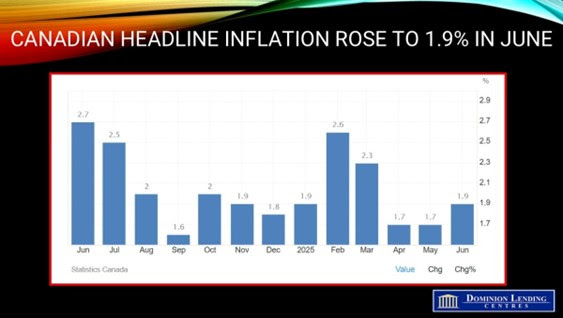
The Bank of Canada’s two preferred core inflation measures accelerated slightly, averaging 3.05%, up from 3% in May, and above economists’ median projection. The three-month moving annualized average of the core rates surged to 3.39%, from 3.01% previously.
There’s also another important sign of firmer price pressures: The share of components in the consumer price index basket that are rising by 3% or more — another key metric the central bank’s policymakers are watching closely — expanded to 39.1%, from 37.3% in May.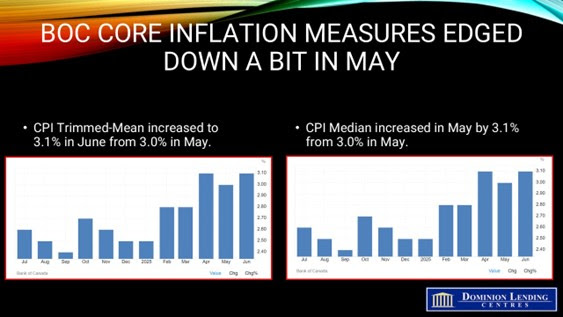
Bottom Line
The chart below, created by our friends at Mortgage Logic News, shows that Canadian economic data have come in stronger than expected on average in recent weeks. This was evident in the June employment report. As a result, the Bank of Canada is likely to remain on the sidelines on July 30 for the third consecutive meeting. The Canadian economy appears to be weathering the tariff storm better than expected, at least for now.
While we expect to see a negative print on Q2 GDP growth, a bounce back to positive growth in Q3 is also possible, precluding the much-expected Canadian recession.
The June inflation data, released today for the US, was weaker than expected for the core price index. Declines in car prices helped mitigate tariff-related increases in other goods within the US consumer basket.
The US inflation data could draw even greater calls from President Trump for the Federal Reserve to lower interest rates. While some officials have expressed a willingness to cut rates when the central bank meets in two weeks, policymakers are generally still divided as to whether tariffs will cause a one-time price shock or something more persistent. They will leave rates unchanged for now.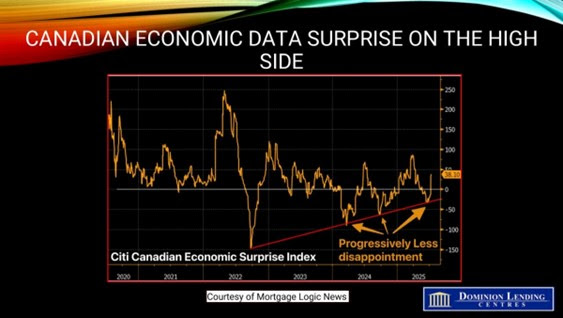
Dr. Sherry Cooper
-

Home Sales Rose As Prices Stabilized–Housing Market is Turning a Corner

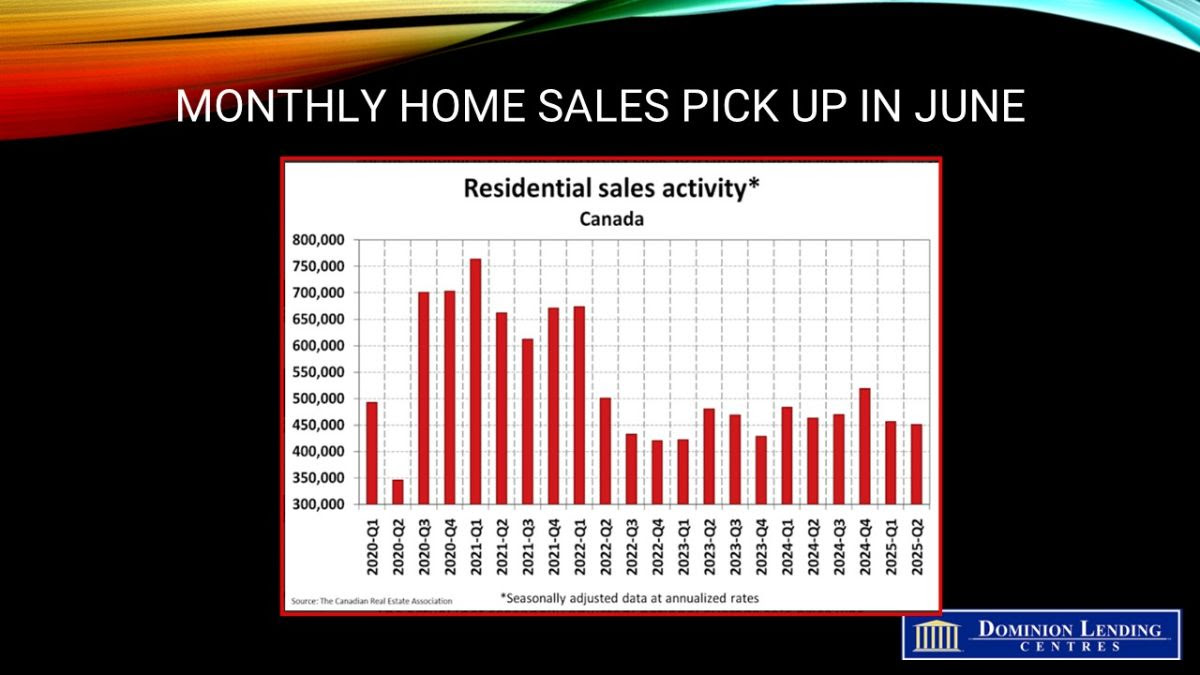
The number of home sales recorded over Canadian MLS® Systems rose 2.8% on a month-over-month basis in June 2025, building on the 3.5% gain recorded in May.
Over the past two months, the recovery in sales activity has been led overwhelmingly by the Greater Toronto Area (GTA), where transactions, although remaining historically low, have rebounded by a cumulative 17.3% since April.
“At the national level, June was pretty close to a carbon copy of May, with sales up about 3% on a month-over-month basis and prices once again holding steady,” said Shaun Cathcart, CREA’s Senior Economist. “It’s another month of data suggesting the anticipated rebound in Canadian housing markets may have only been delayed by a few months, following a chaotic start to the year; although with the latest 35% tariff threat, we’re not out of the woods yet.”
New Listings
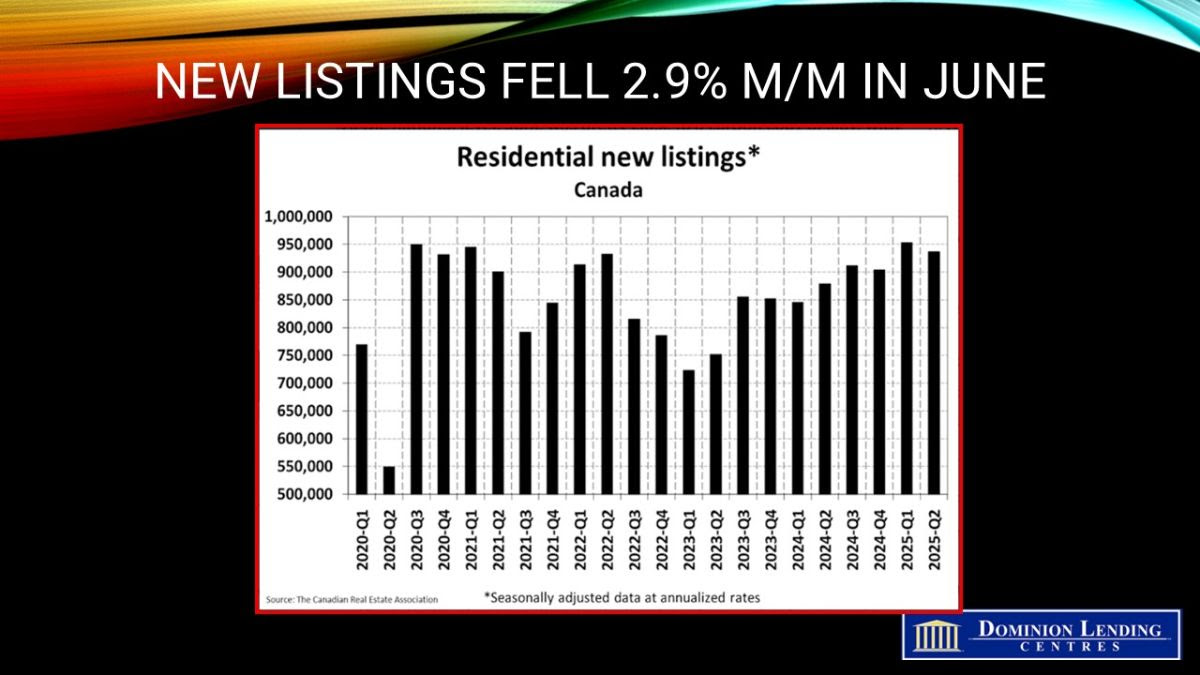
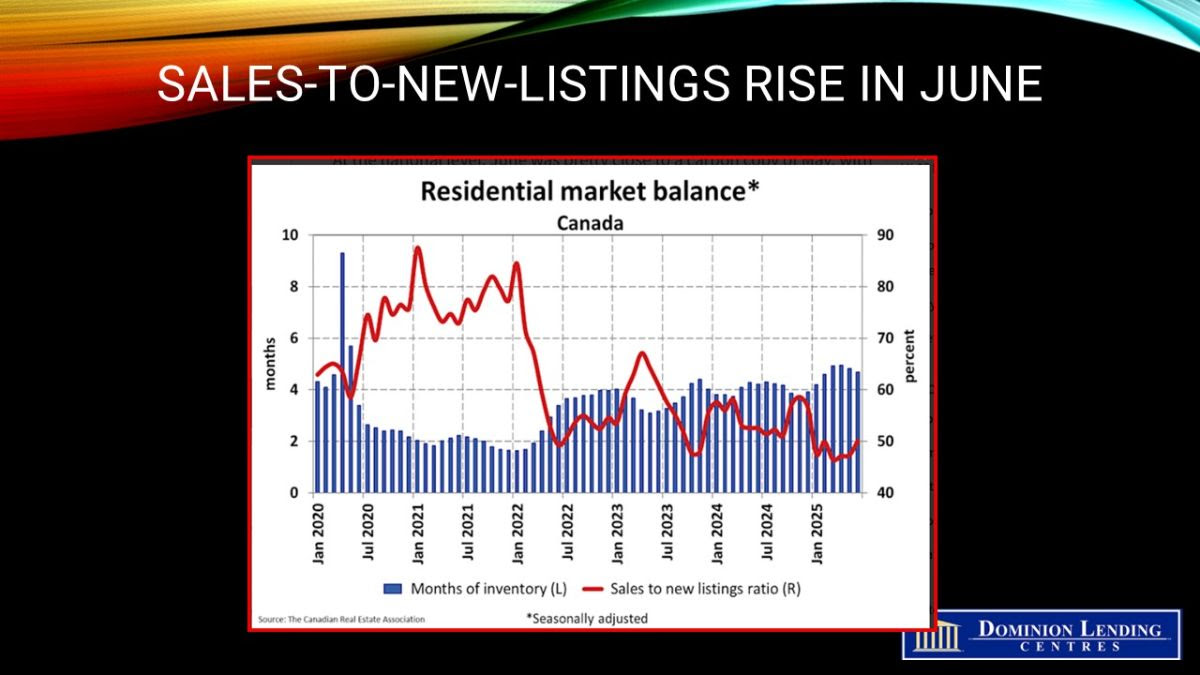
New supply declined by 2.9% month-over-month in June. With sales up and new listings down, the national sales-to-new-listings ratio rose to 50.1%, up from 47.3% in May. The long-term average for the national sales-to-new listings ratio is 54.9%, with readings between 45% and 65% generally consistent with balanced housing market conditions.
There were 206,435 properties listed for sale on Canadian MLS® Systems at the end of June 2025, up 11.4% year-over-year and just 1% below the long-term average for that time of the year.
“Most housing markets continued to turn a corner in June, although market conditions still vary considerably depending on where you are in Canada,” said Valérie Paquin, CREA Chair. “If the spring market was mostly held back by economic uncertainty, barring any further big shocks, that delayed activity could very likely surface this summer and into the fall.”
Home Prices
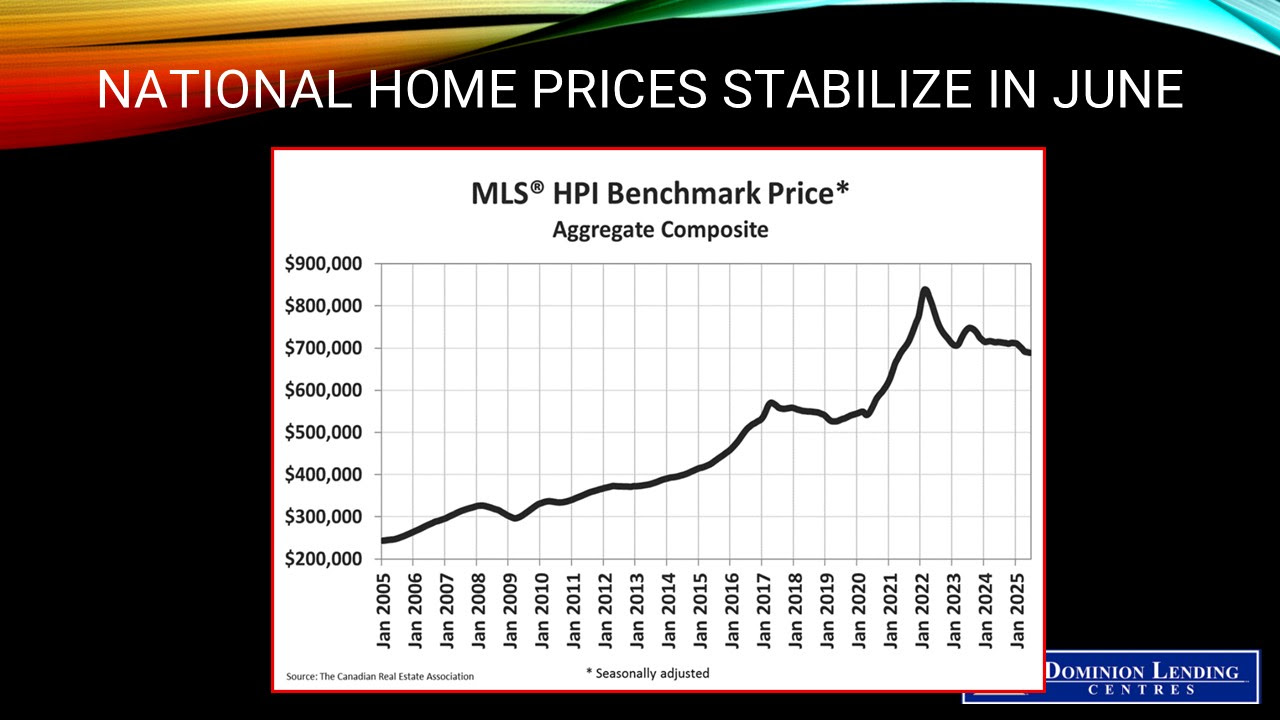
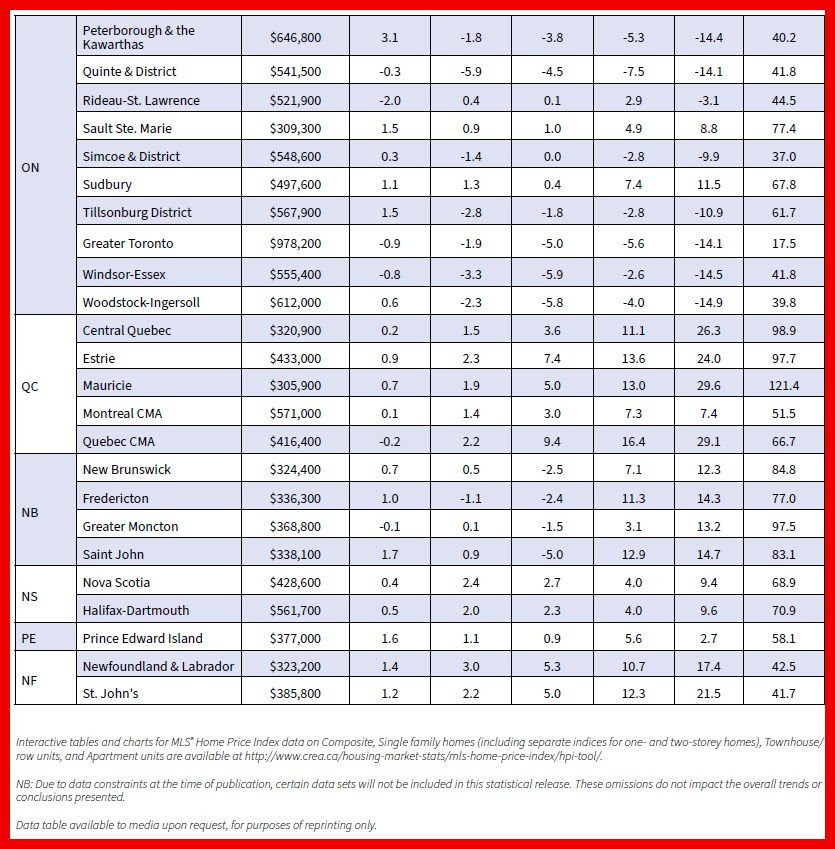
The National Composite MLS® Home Price Index (HPI) was little changed (-0.2%) from May to June 2025, following three straight month-over-month declines of closer to 1% in February, March, and April.
The non-seasonally adjusted National Composite MLS® HPI was down 3.7% compared to June 2024. Based on the extent to which prices fell off in the second half of 2024, expect year-over-year declines to shrink in the months ahead.
Bottom Line
There is every indication that the housing markets in the GTA and the GVA are beginning to perk up following a disappointing Spring market. Sales generally increased in May and June, and new listings fell last month. The price data suggest a flattening in prices. Tariff uncertainty has swamped the psychology of many potential buyers, who are reticent to make a move. The latest 35% tariff threat from Washington doesn’t help.
And while the central bank was expected to lower interest rates further, it took a pass at the prior two meetings and is likely to do so again on July 30th when it meets. This morning’s CPI release for June showed a continued rise in core inflation, effectively ruling out a BoC rate cut.
Moreover, longer-term interest rates are market-driven and have been trending higher since March, when tariff sabre-rattling began in earnest. Canada’s five-year government bond yield broke above its key 3% support level in the past week. This could well trigger another rise in fixed mortgage rates. Furthermore, the Canadian two-year yield is 2.83%, which is above the Bank’s overnight policy rate of 2.75%. This suggests that monetary easing in Canada may be over for this cycle, provided the economy remains resilient. Of course, given the TACO issue (an acronym that stands for Trump Always Chickens Out), any forecast bears more than the usual uncertainty.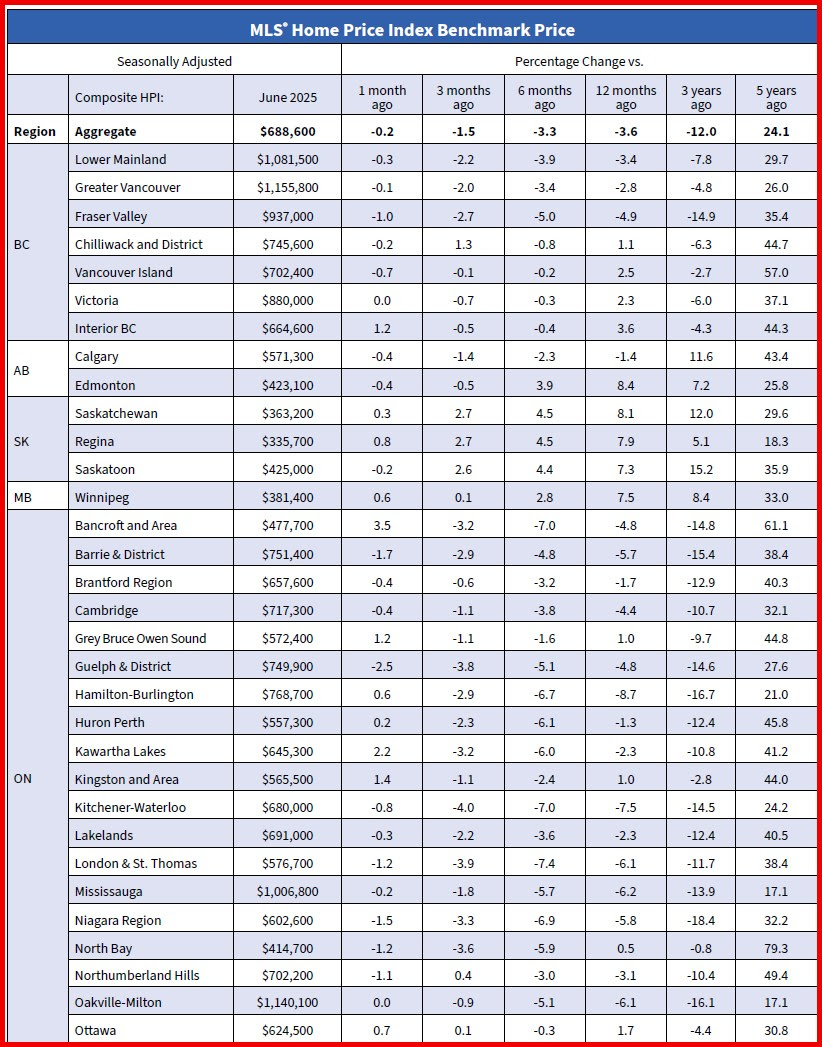
Dr. Sherry Cooper
-

How a Vancouver Commercial Mortgage Broker Helps Buyers with Bad Credit Get Approved
Struggling with Bad Credit? A Vancouver Commercial Mortgage Broker Might Be Your Best Ally
If you’re facing challenges securing a commercial loan due to bad credit, you’re not alone. Many entrepreneurs and property investors in Vancouver find themselves in similar situations. A Vancouver Commercial Mortgage Broker can help navigate these financial roadblocks and uncover viable loan options, even with imperfect credit.
Understanding how brokers can assist—and what strategies actually work—can make a real difference in whether your deal goes through.
1. Vancouver Commercial Mortgage Broker Solutions for Bad Credit Borrowers
A Vancouver Commercial Mortgage Broker has access to a wide range of lenders beyond traditional banks. For borrowers with less-than-perfect credit, brokers often explore two key alternatives:
- Private lenders – More flexible but often come with higher interest rates.
- B-lenders – Institutions that accept moderate risk and may consider applicants with a credit score under 600 if other parts of the application are strong.
These brokers can help explain late payments or defaults on your report in a strategic and honest way, turning a “no” into a “maybe”—and possibly into a “yes.”
2. How a Vancouver Commercial Mortgage Broker Can Boost Your Application: Down Payment, Co-signers, and Collateral
Even with bad credit, you can improve your odds of approval with a few smart moves:
- Larger down payment: Offering 30–40% instead of the typical 25% shows commitment and lowers lender risk.
- Co-signer or guarantor: Adding a creditworthy partner to your application can increase lender confidence.
- Collateral: Whether it’s existing real estate, equipment, or inventory, secured loans are more likely to be approved.
A Vancouver Commercial Mortgage Broker understands how to present these components together to paint a stronger overall picture for lenders.
3. Two-Step Strategy with a Vancouver Commercial Mortgage Broker: Rebuild Your Credit While Securing Financing
Let’s say you’re not quite ready to apply. Here’s a dual strategy to strengthen your position:
- Rebuild credit: Pay off small debts, maintain low credit utilization, and use secured or low-limit credit cards actively. A six-month focus on improvement can move your score meaningfully.
- Transitional loans through brokers: Some Vancouver Commercial Mortgage Brokers can help you obtain short-term or bridge loans to keep business plans on track while you work on long-term credit health.
Final Tip: Leverage Your Team to Reduce Property Risk
Even the perfect loan isn’t enough if you’re buying into a problematic property. Sites like https://estatedetect.com can run in-depth diagnostics on a property’s legal, structural, and financial history—letting you spot hidden risks before you buy.
And when you’re ready to move forward, don’t go it alone. A trusted expert like MorningLee.ca can match you with the right commercial financing strategy—whether you’re buying, selling, or refinancing.
📖 Read more on how working with a broker can transform your financing experience:
Why Working with a Vancouver Commercial Mortgage Broker Is Essential for Smarter Property Financing -

Buy Commercial Property in Vancouver: A Smart Investor’s Guide
In today’s thriving real estate market, understanding how to buy commercial property in Vancouver is more important than ever. Whether you’re an investor looking to expand your portfolio or a local entrepreneur securing a storefront, navigating Vancouver’s commercial real estate landscape requires a combination of market knowledge, legal awareness, and strategic financing.
Why Buy Commercial Property in Vancouver?
Vancouver is one of Canada’s most dynamic cities, with a commercial real estate sector that continues to show strong potential. Whether you are eyeing retail, office, or mixed-use spaces, knowing how to buy commercial property successfully hinges on local regulations and expert guidance.
The city has specific zoning laws, environmental requirements, and property taxes that differ significantly from residential purchases. Due diligence is essential—not just in property inspection, but also in verifying leasing history, tenant stability, and zoning compliance.
Step-by-Step Guide to Buy Commercial Property in Vancouver
1. Define Your Investment Strategy
Before entering the market, clarify your objective: Are you buying to lease? Develop? Flip? Your goals will determine the type of property you seek and your budget. An experienced real estate agent in Vancouver can help analyze risk, ROI, and market trends.
2. Secure Financing Early
Commercial mortgages often require a higher down payment—typically 25-35%. Rates may differ depending on the asset type and borrower profile. For business owners or new investors, working with a mortgage advisor who understands the Vancouver market is crucial.
Consider visiting WealthDaoConsulting.com, a platform offering insights on digital marketing, SEO, and business financing. Their article on E-Commerce Essentials: Building Your Online Empire From the Ground Up draws parallels between business development and strategic property investment—both require a solid foundation and growth mindset.
3. Due Diligence and Legal Considerations
Before signing anything, conduct a full review of the building’s title, environmental compliance, and any existing lease agreements. It’s also vital to understand GST obligations, which differ from residential transactions.
This is where having a real estate agent in Vancouver proves invaluable—they can help identify red flags, refer you to legal experts, and guide negotiations.
Common Mistakes When You Buy Commercial Property
- Ignoring Zoning Restrictions: Not all commercial properties can support your intended business activity.
- Overlooking Vacancy Rates: High vacancy may indicate an undesirable location or future financial strain.
- Underestimating Maintenance Costs: Older buildings can carry hidden repair costs.
Avoiding these pitfalls requires not just awareness but partnership with local experts who know the terrain.
The Role of a Real Estate Agent in Vancouver
A professional real estate agent in Vancouver does more than show properties. They provide market insights, negotiate deals, and ensure legal compliance—especially vital when you buy commercial property in a competitive market like this.
Whether you’re a first-time buyer, experienced seller, or someone exploring mortgage options, platforms like MorningLee.ca offer tailored guidance to navigate Vancouver’s real estate and financing opportunities with confidence.
For personalized advice on your next real estate or mortgage decision, visit MorningLee.ca—your trusted partner in Vancouver’s commercial property market.

What people say:
“As first-time buyers in Vancouver, we were overwhelmed. Morning Lee didn’t just find us the perfect Kitsilano condo within our budget, she patiently educated us every step of the way. Her negotiation skills were incredible – we got the place below asking in a competitive market! She made a stressful process feel empowering.”
Sarah T.,
Registered Nurse
Arjun P.,“Securing the right location for our expanding tech consultancy was critical. Morning Lee understood our business needs intimately, not just the square footage. She found us a strategic Gastown space with growth potential and expertly negotiated the lease terms. Her dual perspective on business and real estate is invaluable.”
Founder & CEO, NexGen Solutions
Elena R.,“Financing multiple investment properties can be complex. Morning Lee’s mortgage expertise is next-level. She secured us significantly better rates and terms than we thought possible, structuring the financing perfectly for cash flow. She doesn’t just get mortgages; she builds wealth strategies.”
Real Estate Investor
David L.,“I almost launched my e-commerce platform with costly mistakes. Morning Lee’s ‘Risk Free Startup Success’ framework (PRISMs Method) was my blueprint. Her consulting helped me validate my idea, set up efficient ops, and create a killer digital marketing launch plan. We hit profitability in Month 6 – her guidance was the game-changer.”
E-commerce Entrepreneur
Marcus W.,“We needed to refinance our manufacturing facility AND improve our bottom line. Morning Lee tackled both seamlessly. She secured optimal commercial financing, freeing up capital, then her profit consulting identified clear operational inefficiencies. Implementing her strategies boosted our profit margin by 30% within a year. A true business partner.”
Operations Director, Cascade Manufacturing
Priya S.,“Scaling my team felt chaotic until I worked with Morning Lee. Her consulting, rooted in the principles from ‘From Leadership to Success,’ transformed our culture. She helped define clear roles, implement effective communication channels, and develop a strategic roadmap everyone aligns with. Productivity and morale have soared. Essential leadership wisdom.”
Marketing Director, Bloom Creative Agency